Monday, 23 November 2015

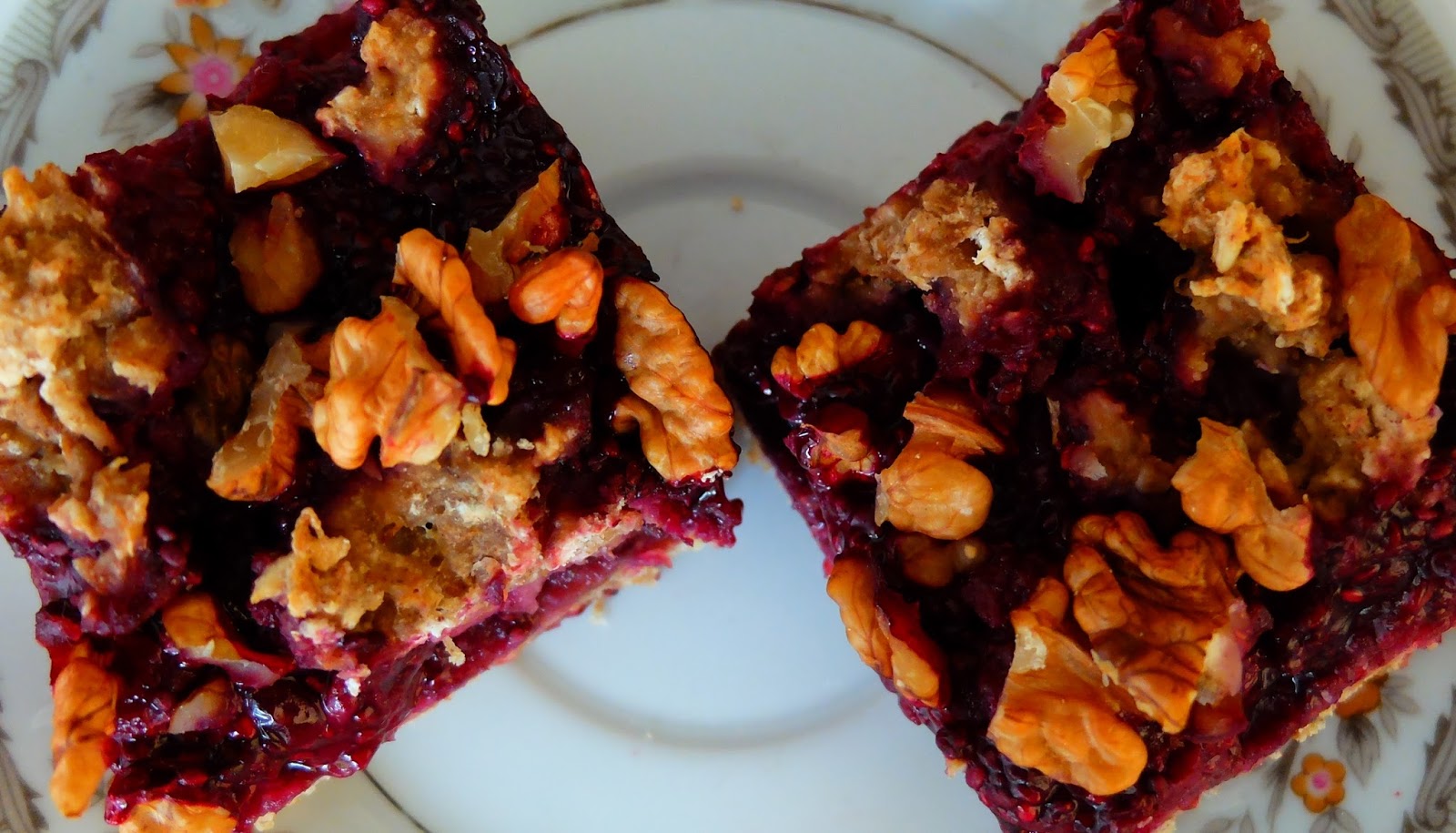
Recipe: Oat squares with chia jam

Today, I am sharing with you this yummy oat chia jam squares recipe. They are easy to prepare, tasty and not overly sweet. The base of these squares are made of oats and bananas. We will do without flour or oil in this recipe. I have used a bit of rice and spelt flour instead of ground oats in the original recipe. The top layer is made from chia seeds and berries. Original recipe calls for frozen raspberries, but I used frozen berry mix.
Chia seeds are one of the superfoods and come from the desert plan called Salvia hispanica, grown in Mexico, Bolivia and Argentina. They have mild, nutty flavor, making them easy to add to different foods and beverages. They are rich in omega 3´s fatty acids and also contain a lot of protein, fiber and minerals. The seeds are dissolvable, absorbing up to 12 times their weight in liquid when soaked. While soaking, the seeds develop a gluey gel-like coating that gives chia-based beverages and liquid foods a distinctive texture. Chia seeds should always be put into a liquid based mixture (water, plant milks, smoothies, green drinks, raw or baked bars and cookies, breakfast oatmeal) and never eaten dry on its own. Either whole or ground chia can be used in the food preparation. It is a good replacement for an egg and oil in cakes in vegan recipes in addition of providing great health benefits from their nutrient content.


Oat squares with chia jam
 
Ingredients for chia jam:
  • 300 g raspeberries (frozen), I used 400 g frozen berry mix and about 100 g fresh blueberries
  • 3 tbsp chia seeds
  • sweetener according to taste (I used 1 tbsp maple syrup)
 
 Ingredients for oat square base:
  • 2 soft bananas
  • 100 g whole oats
  • 100 g ground oats (here I used 1/2 spelt and 1/2 rice flour with 1 tbsp corn flour)
  • 1 tsp cinnamon
  • 1 tsp baking powder
  • handful chopped wallnuts
  • sweetener of your choice (I used 2 tbsp maple syrup)


First, prepare the chia jam. Place your berries in the pot on the stove, with a little water, stirring regularly. Cook this until very soft. Set aside, stirring in chia seeds and sweetener of your choice. Let it cool for an hour.

Prepare the oat base by mixing bananas (feel free to do it with your hand mixer, or by hand as I did), adding oats, flour (if using), cinnamon, baking powder and sweetener to taste.

Pour 3/4 of the mixture into the prepared baking tray. You can press it down a little bit. I used a bakeware measured 30 x 21 cm and wiped it out with a light coating of coconut oil. You can also line your tray with a piece of parchment (baking) paper. Pour chia jam on the oat base and sprinkle the remaining mixture and crushed wallnuts on top.

Bake at 180 °C for 30-40 minutes.

Take out, let it cool and enjoy. It is very tasty on its own, but you can revamp it with some whipped coconut cream.

1pc: 124 cal, 3g protein, 21g carbohydrates, from which 3g is fiber, 3g fat


recipe adapted from fitcult.refresher.sk

Thursday, 19 November 2015

Recipe: Antioxidant energy coconut cacao balls

Eating chocolate has always been a favorite of mine. I love everything chocolate and mix and try it in different recipes. Few years back, however, I switched to eating dark (70% and up) chocolate. When trying and making different recipes I try to use cacao powder or organic cocoa powder.

Legally speaking there is no real difference between cocoa and cacao. In practice however, cocoa usually refers to products suitable for hot chocolate drinks or some baking recipes, whilst cacao refers to minimally processed raw cacao beans, powder, nibs, paste and butter. The difference between them is in the way of processing.

therealfoods.co.uk

The cacao is a fruit tree, also known as Theobroma Cacao. It produces fruits called cacao pods, which are cracked-open to release a cacao bean. Cacao trees grow in the Amazon Basin, Orinoco River Basin, Ghana, Phillipines, Brazil, Papua New Guinea, Ecuador, Togo and a few Carribean islands.

Raw cacao powder is high in antioxidants, it has 20 times the antioxidant levels of blueberries and 3x more than in green tea. One of nature´s highest dietary sources of magnesium, cacao beans are also rich in iron and an excellent source of dietary fiber. They are also full of good fat, carbohydrates, protein, polyphenols like flavonoids that are antioxidants, minerals like calcium, sulfur, copper, zinc and potassium, oleic acid which is a heart-healthy essential monounsaturated fat, fiber and vitamins E, B1, B2, B3, B5 and B9.

A single cacao bean contains 54% fat (that is the cacao butter), 31% carbohydrates (mainly fibre with a tiny amount of sugars), 11% protein (including arginine, glutamine and leucine), 3% polyphenols (flavonoids and proanthocyanidins) and less than 1% trace minerals including magnesium, iron, copper and phosphorus, as mentioned above.


COCOA

Usually, cacao beans are heated at a high temperature which makes it easier to remove the nibs from the husks. This process is called winnowing. So when roasted, the cacao nibs are separated out. These are then ground to a liquor (paste) consisting of cacao mass and cacao butter. After this, it is pressed, to remove some butter content. The pressed solid result is ground again to make into cocoa powder.

Cocoa can be also processed further by alkalizing it which increases its pH and mellows the flavor. This is know as dutch-processed cocoa powder. Cocoa/cacao is naturally acidic, and bitter in taste, so to neutralize its acidity it is washed in potassium solution. This results in milder flavor and taste, is sweeter and richer in color, therefore more suitable for making hot cocoa drinks and some baking recipes. There are few however, where Dutch cocoa cannot be used due to the lack of acidity, where the recipe calls for bicarbonate soda as an ingredient. There is no acidity in Dutch cocoa, so the cake would not rise. Dutch cocoa is usually used with baking powder which contains an acid to activate its bicarbonate. Dutch processing is an European style, therefore more used in European style recipes.


CACAO

Raw cacao powder is made by cold-pressing un-roasted cacao beans to remove the fat (cacao butter) without killing the living enzymes. It is therefore the least processed form, with most nutrients and minerals. With this method, cacao beans are not roasted but sun-dried instead, making it far more labour intensive to separate and therefore often more expensive. 

Raw cacao butter is generally pretty tasteless, but it is essential for making pure chocolate. But it is not the only way to make it. 

Raw cacao liquor also known as cacao paste is made by pressing the whole cacao bean and heating it (at low temperatures, below 42 degrees) to create a paste, instead of separating out the beans into cacao butter and powder. You can simply melt the liquor, add some sweeteners and flavors and you will end up with some delicious chocolate!

Since there is difference between cocoa and cacao powder, the chocolate as a result is therefore different as well. Dark chocolate made from raw cacao powder and cacao butter, or with pure cacao paste will be richer in taste and more nutritious than the chocolate made of processed cocoa powder. But it is important to note, that when buying chocolate, whether it is made from cocoa or raw cacao powder, it is best to choose dark varieties, with 70% cacao content or more. 

As for the processed cocoa powder, avoid varieties with added sugar together with other additives, especially those present in ready made hot chocolate powders. 

Regarding the health effects of the cacao and cocoa, there is not much difference, so choose pure unsweetened cocoa powder (processed) or Dutch-processed cocoa, if you prefer milder and sweeter taste, or richer more nutritious raw cacao powder, for better health benefits. Even though, raw cacao powder is made by cold-pressing, it is not completely raw, since it undergoes some kind of processing. To sum this all up, eating raw, unprocessed cacao beans has the most nutrients and offer the most health benefits.

With the further delay, I would like to share this delicious recipe with you:


Antioxidant energy cacao coconut balls


Ingredients:

  • 150 ml coconut oil
  • 100 gr cocoa/cacao powder
  • 100 gr raisins (soaked in warm water for 5-10mins)
  • 1/2 tsp pure vanilla powder or 1 tsp vanilla extract
  • 70 g maple syrup
  • 100 gr shredded coconut
  • 2 tbsp flax seed powder
  • 1 tbsp maca powder
  • 1 tbsp mesquite powder 
 
Superfood powders are optional in this recipe. Feel free to omit these or add anything else, just note, the balls will not have the exact same taste.

Start with melting the coconut oil. Add the cacao powder, shredded coconut, raisins, vanilla and maple syrup. Lastly, mix in the flax seed powder and the superfood powders, if using. 

The consistency will be soft, but when rolled into balls, it should hold together. If you prefer dryer texture, you can add more shredded coconut or cacao powder. It is not necessary though, as they will harden in the fridge.

Mix all the ingredients well and start forming 1 tsp sized ball. The size of the balls is up to, you can make them smaller or bigger, according to your liking. When I make this, I usually use 1 full tsp of the mixture and roll it into the ball. When done rolling, you should have about 30 pcs, less if you making bigger balls.

Sift some shredded coconut onto the plate and roll each ball in it.

Place the balls in the fridge to harden. It is best enjoyed when kept in the fridge. they will also last longer like this. If you prefer them softer, simply keep them on your counter at the room temperature.


Now, put this chocolate deliciousness straight into your mouth !


sources:
thesuperfoods.net 
realfoods.co.uk

recipe adapted from melissaambrosini.com
 

Monday, 16 November 2015

How to reduce the exposure to toxins in your home

Toxins are essentially everywhere around us and almost unavoidable. We inhale them while driving to work and wipe down our kitchen counters. They can be found in furniture, cushions and mattresses. The fresh vegetable and fruit produce is coated and sprayed with damaging pesticides, herbicides and genetically modified organisms (GMO´s). Older paint contains lead. That is just to name a few. But there are definitely ways how to reduce one´s exposure to them.

www.howstuffworks.com

There is a few tips to keep your home toxic-free:

1) Remove your shoes

Remove shoes before entering the house and encourage family members to do so. It will prevent accumulation of dust, which can contain toxins and metals like lead.

2) Vacuum frequently

www.mrhomecare.in

Vacuum frequently, especially if you have carpets. Try to do this for up to twice a week and steam clean them with a clean water. Do this on dry and sunny days.

3) Choose organic cleaning products or make DIY ones

Choose organic and eco-friendly cleaning and washing products for the home. Use eco-certified but always check labels for chlorine bleach, phosphate, petroleum and chemical fragrance. We expect these to clean our house and leave everything artificially clean and super polished. We will get this task done by commercial products, which we use an array of for different tasks in the house, such as mopping, cleaning the windows, polishing, toilet cleaning, clothes washing and the host of others. Chemicals in these products will do what we expect them to do but they also contribute to air pollution, they are poisonous when ingested and may be harmful when we inhale or touch them. Some may cause immediate reactions and irritations to the skin or eyes while others can cause long term chronic illnesses such as cancer. Most dangerous cleaning products are drain cleaners, oven cleaners and acidic toilet bowl cleaners. Chemicals in them can cause burns on the skin and eyes and breathe problems with the damage to the throat. Similar to the personal care and cosmetics, they can cause long term health damage with hormone disruption, damage to the nervous system, lungs and cancer. In addition, they pollute the air, water and the whole environment.

Please check the articles in these links for the more comprehensive info:


The article in the first link will give you some ideas and tips what eco-cleaning products one can use. However, there is also a possibility to create your own DIY eco-home products, here are some tips:
  • 1/2 cup white vinegar to a bucket of hot water - for mopping tile and linoleum floors
  • 1/2 cup white vinegar or lemon juice + 1/2 cup water - pour in the spray bottle, for window cleaning
  • 1/4 cup baking soda and 1/2 cup white vinegar + 2 litres of water - for all purpose cleaner
  • 1 cup olive oil + 1/2 cup lemon juice in a spray bottle for polishing wood furniture. Polish dry with a fresh cloth
  • cornstarch or baking soda - for greasy counter tops and around the stove - let it soak the grease and then just wipe off
  • 2 cups castille soap + 2 tbsp water + 2 tbsp vinegar for homemade dish soap 
TIP: Try to add a few drops of essential oils in your DIY cleaners, they are great for cleaning and smell lovely too. Best are: tea tree, lavender, lemon, orange and peppermint essential oils.

4) Choose organic produce

www.seela.org

When and where possible, choose organic foods and produce. This will lessen the toxic and chemical exposure to the body, however not eliminate it completely. We can control the foods we eat and put into our bodies. Try avoiding all packaged foods as those in boxes, packets and tins. Read the labels on the products. Avoid completely those with warning numbers that you do not know and list of ingredients that you cannot pronounce.

These 12 items in the fresh produce are called dirty dozen and it is always advisable to buy them organic (listed in order of contamination)
  • apples
  • celery
  • sweet bell peppers
  • peaches
  • strawberries
  • nectarines
  • grapes
  • spinach
  • lettuce
  • cucumber
  • blueberries
  • potatoes

Here is the list of clean fifteen, listed in order of least contamination:
  • onions
  • sweet corn (frozen)
  • pineapple
  • avocado 
  • cabbage
  • sweet peas (frozen)
  • asparagus
  • mango
  • eggplant
  • kiwi
  • cantaloupe
  • sweet potatoes
  • grapefruit
  • watermelon
  • mushrooms

However, it is very beneficial to go and buy an organic produce and other products, for many this can be also hard to afford. It is therefore important to remove some pesticides coating on the fresh vegetables and fruits. Pesticides have been linked to birth defects, cancer, parkinson´s, autism and other illnesses.
You can buy veg and fruit cleaner in the health shop (always check for unwanted ingredients) but there are also DIY at home ideas that you can do:
  • for produce wash - fill kitchen sink with 1 part vinegar and 4 parts water. Let your produce soak for up to 2 hours. Remove and rinse with water.
  • for produce wash - fill the kitchen sink with 1 part salt and 9 parts water, let it soak, and rinse afterwards. This should work as well as the vinegar, if not better.
  • for produce spray - mix 1 tbsp lemon juice with 2 tbsp baking soda and 1 cup of water in a clean spray bottle. Spray your produce and let sit for 5-10 minutes. Rinse off and enjoy.
Eating fresh produce far outweighs the risk that comes with eating non-organic vegetables and fruits, so pesticides should not stop you from buying and eating fresh veggies and fruits. If you can afford it, try to buy organic and thus reduce the amount of pesticides and the unwanted health problems that come with it.

5) Use eco-friendly cookware

Use only environmentally friendly cooking appliances and cookware. Steer clear of using non-stick pans and pots and those containing aluminium. Teflon is used for the coating in non-stick pots and pans. Cooking with it has implications for your health. Teflon contains these compounds listed below:

  • PFTE (polytetrafluoroethylene) - is a coating often used for non-stick cookware. When heating teflon to high temperatures, some people reported flu like symptoms
  • PFOA (perfluorooctanoic) - is known as C8 and a synthetic compound, and also involved in manufacturing of Teflon. Using it has been linked to serious changes in organs.
  • Aluminium is a metal that has been linked to severe health issues. It collects in your body tissues and can make you very sick. When heated, it reacts and leeches into the food and specifically reacts to acidic foods like tomatoes. Cheap aluminium cookware is the worst and it is not better to use tinfoil while cooking, either. We tend to use it without thinking much about it.
Teflon coated cookware start to chip and flake away quite early after starting using it because it is not very durable. Once the teflon coating is scratched, the best thing is to throw your pan away.

There are better choices for cooking in a healthier way without poisoning your food with chemicals:
  • ceramics - choose high quality ceramics without lead, found in glazed ceramics. They are scratch resistant and durable as well
  • stainless steel - they are much less prone to leeching and reactive when heated. Buy only good quality stainless steel that is not high in nickle
  • cast iron - can last very long time. Cooking with is is a time-honoured tradition. Taking care of your cast iron pots is beneficial and useful and also a good habit to have. To do so, wash it gently, dry it immediately and wipe it with a light coat of oil.

6) Use glass and ceramics and avoid plastics

www.betterlivingthroughdesign.com

Always or when possible, choose glass and ceramics over plastic. Plastics contain BPA, BPS and phthalates and are concern for our health. BPA is found not only in plastic bottles and jars but in coating of food tins as well. Try to choose glass bottles and containers for kids too. Plastics contain endocrine-disrupting chemicals, that interfere with the hormone system, causing birth defects, metabolic disorders and tumors. There is a possibility to choose BPA free containers, but they are not always free of all toxins.

7) Find chemical free hair salon

If possible, try to look and find chemical free hair salon. This may be more difficult to find, but they do exist, so try to do some research in the city where you live.

8) Drink clean water

www.placesintheforest.com

It is beneficial for our health to drink clean water, but tap water does not provide us with the water we would like to drink. Tap water is full of dirt, unwanted bacteria and pesticides, and even contains heavy metals like chlorine and fluoride. Therefore it is good to invest in a good quality water filter system like reverse osmosis water filter or a ionizer. Spring water is even better option for our health. It is pure clean water from the earth with additional minerals in it.

9) Open windows in your house 

Open windows in your home regularly to clean the air from common pollutants like formaldehyde, allergens like dander and dust mites. Do this even if it is cold outside. As little as 5 minutes a day has been shown to significantly decrease the concentrations of indoor air pollutants in your home. To detoxify further, you can purchase and use a good quality eco-friendly humidifiers.

10) Exercise

www.sheffieldsportsmedicine.com

Exercise is very beneficial for one´s health. While moving, we move organs and muscles in our body, as well as the body flow to the heart and brain. Exercise does not only make you feel better and younger but it also helps with removing toxins from the body when sweating. Try to do 30 minutes 4-6x a day, with combination of cardio movements and strength training and some stretching. It is great to incorporate some HIIT (high intensity interval training) into your workout routine, it helps with endurance, improving your stamina and you burn calories even after you stop exercising.

11) Buy PBDE free furniture

Buy PBDE (polybrominated Diphenyl Ethers) free furniture. PBDE are chemicals used in flame retardants on furniture. These were widely used in the past when fires were very common occurrence in many households. It does not happen much nowadays, but these chemicals are still being used when manufacturing the furniture. It is a chemical of concern with potential neurobehavioral effects. When shopping for a new sofa, make sure to read the labels and find out what the fabric and material is made out of.

12) Stop using artificial sweeteners

www.foodandhealthrevolution.com

Stop using artificial sweeteners, such as aspartame and sucralose. These have been linked to number of illnesses like diabetes, heart attacks and strokes. For healthier options rather choose stevia, raw honey and date syrup or xylitol and maple syrup in smaller amounts.

13) Eliminate the use of electronic devices

Eliminate using electronic devices and thus eliminate your exposure to radiation, especially with cell phones and WIFI signal. When sleeping, leave your phone in a different room and switch your WIFI off. More studies are revealing that the cell phone radiation causes cancer.

For what the world look like if cell phone radiation was visible check this link below:

14) Try to avoid sitting in the chair for prolonged period of time

www.fastcoexist.com

Sitting in your chair can have dramatic consequences on your health. Prolonged sitting has been tied to various chronic diseases and even early death. When sitting, all our organs shut down in this unnatural position, because they do not get the adequate movements as they do when we move, walk and exercise. Electric activity in muscles drops significantly and calorie burning rate goes down to 1 calorie per minute, and the result is decreased blow flow pumping into the heart and brain. It must also be said that even if we exercise regularly an hour a day, will not reverse the effects sitting has on our overall health. Sitting for 6 hrs a day for 10-20 years may leave you with a loss of 7 quality-adjusted life years (those without illness and death). In woman, it has also been shown decrease in bone mass upwards of 1% every year. When at work or at home sitting, try to stand up from your chair, desk or couch regularly and walk around, every hour, if possible. You can do little stretches too, if your environment allows you to do so.

15) Destroy bugs and mites in your bed

When we sleep, we sweat. This creates and ideal environment for the mites in our bed. There can be around 1,5mil dust mites living in the average bed, feeding on our old skin cells. If you make your bed immediately after waking up, the mites are trapped under the sheets until bedtime. They can survive only by taking water from the atmosphere using their small glands. So, simply leave the bed unmade during the day or at least while you prepare for work. Remove the duvet to dry and let the rest of the bedding air dry. This way, mites will dehydrate and eventually die. It is also advisable to change you bedding at least every 2 weeks.

16) Reduce stress and negativity

www.judiholler.com

Reduce stress and negativity in your life. We are what we think. Think positive thoughts and shift your emotions. They, together with the way you feel, play a huge part in regards to your overall health.


sources:
mindbodygreen.com
organicburst.com
healthy-holistic-living.com
faithful-to-nature.co.za
organicconsumers.com
collective-evolution.com


Friday, 13 November 2015

Recipe: Green smoothie with kale and pineapple

I have started making green smoothies couple of months ago and have not stopped since. Having green smoothies or juices (there is a big difference though, more about that below) is a good way to up your intake of veggies and fruits, but especially leafy greens. This way you will easy have your 5 a day in a short period of time. Think of the time it would take you to eat and chew the same amount of fruits and veggies. This does not mean you should not eat fresh fruits and salads, but is great for those who find it difficult to eat the recommended intake. The base for your green smoothies and juices are veggies and leafy greens and their content should be 70% for smoothies and even 80% for the juices.

source: movenourishbelieve.com


What is the difference between smoothies and juices ?

Blending a smoothie

Smoothies are usually made in a blender, high power blender is recommended. When making them, a liquid must be added. You can make just pure fruit smoothies, with addition to milk, I recommend plant based milk, or a mixture of greens/veggies, fruits and/or milk. When making smoothies whole cut up fruits are being blended in the blender. When doing this, the gut-friendly fiber from fruits is not removed and you are getting benefit from it when drinking. Fiber being present in the smoothies also ensures a slow and steady absorption of sugar into your bloodstream. It also makes you feel fuller longer, therefore it can be a great and filling meal replacement, too.

You can add different things into your smoothies, which is the advantage you have compare to drinking juices. As as said, the base should be green veggies, such as kale, spinach, arugula, cabbage, mint, coriander and other greens. You can then add cucumber and avocado - which is great for smooth texture and added healthy fats. As for fruits, the choice is yours, but kiwi fruit, pear, apple, various berries, pineapple, papaya, nectarines are great choices.

I personally, add only 1 portion of fruit per glass of smoothie. I usually make about 3 glasses, then I would add 3 different fruits, my favorites are kiwi, banana, pineapple, berries and apple. I have made only green fruit smoothie so far without the addition of plant milk. However, I always add some extras like flax seed powder, hemp seed powder and baobab powder. These are not possible to handle by a juicer. My new favorites are maca and mesquite powder. They are great addition, and mesquite especially, if you want to add some sweetness to your smoothie without having to put too much fruit. Mesquite is a south american white carob with a nice caramel flavor and can be added to different dishes, smoothies, as a sweetener or flour into cakes. Other great extras are cinnamon powder, turmeric, green superfood powders and using coconut water instead of plain water.

I will talk about superfoods in one of my upcoming blog posts.

It is nice to alternate between different fruits and veggies in your smoothies and add various additional stuff like fresh grated ginger, lemon and lime juice and even nut butters and almond flour. Nuts and nut butters are great when making more creamy smoothies together with almond or coconut milk. In fact, fats are great in smoothies for extra protein intake.

Blending is quicker compare to juicing and the cleaning is done quicker too. Blenders usually cost much less than juicing machines, even if opting for a more expensive and quality blender.

There is a possibility to make green smoothie in the blender as well. It is more time consuming than just blending your produce, but it can be done if you do not have a juicer or want to use blender for both smoothies and juices. When done with blending your fruits and greens together with water in your blender, simply use nut milk bag or paint strainer bag and strain the fiber out.

source: crazysexyjuice.com

Juicing

Juicing, on other hand, is the process of extracting the liquid content of whole fruits and vegetables through a juicer. Fiber is then discarded. Due to this fact, you will also have to use more produce, to get the same amount of liquid when making smoothies, because no extra water is used while juicing and the fiber is removed. But removing the fiber, all of the nutrients in the juice like vitamins, minerals, enzymes instantly flood our bodies with goodness. Juicing also give your digestive system some rest, so it is great for those whose digestive systems cannot handle so much fiber. They are great for healing and repair in general and a better choice for those with some health concerns wanting to improve their health.
They are better option for those who cannot stand the thicker texture of smoothies and it allows you to drink bigger amounts without feeling full compare to smoothies.

While juicing, only vegetables and fruits with high water content are used, like different leafy greens, cabbage, cucumber, celery, tomato, carrots, apples, pears, pineapple, papaya, berries, citrus fruits, watermelon and cantaloupe.


Making juices is more time consuming and also more expensive, because more produce must be used and the cost of a juicer is higher than that of a blender. Juicers also usually serve only for juicing purposes.


The bottom line is that both juicing and blending are wonderful and efficient ways to maximize your consumption of the good stuff like greens, vegetables, fruits and superfoods. One has fiber, the other does not. One will give you a maximal nutrient intake in one sitting, while the other allows you to incorporate a wide range of ingredients and take advantage of fiber, protein and healthy fats.

It is probably best to incorporate both into your daily eating practice and reap different benefits for the health they provide. You will not go wrong with using either of them or both at the same time especially when you are flooding your system with alkaline rich foods that are great for your body and health.


Here, I would like to share a simple green smoothie recipe:


Green smoothie with kale and pineapple


Ingredients:

  • 2 cups curly kale
  • 1/2 cup fresh mint leaves
  • 1 tbsp baobab powder
  • juice from 1/2 of lemon
  • 1 tbsp flax seed powder
  • 1 tsp fresh ginger
  • 1 cup cut pineapple
  • 1 cup water
I usually start blending my greens in the water, then I will add everything else and blend again until everything is incorporated well and the result is smooth.

You can substitute kale with other greens like baby spinach, which may give a bit smoother result and a bit different taste.

The ingredients listed will give you 3 medium (3x 300ml) or 2 big portions (2x 450ml).


Enjoy


Wednesday, 11 November 2015

Recipe: Chocolate oatmeal no-bake bars

As soon as I saw this recipe online it caught my eye and decided I have to try it. It calls for only few ingredients, it is raw with no artificial ingredients and no flour and very simple to make.


Chocolate oatmeal no-bake bars

Ingredients:
  • 1 cup peanut butter (use no salt, no sugar version, otherwise your bars will end up too sweet)
  • 1/3 cup honey, or less according to taste (original recipe had 1/2 cup, but I have found the result was very good with 1/3cup)
  • 1/3 cup coconut oil 
  • 2 cups old fashion oats
  • 1 cup shredded coconut
  • 1/2 cup chopped nuts/raisins/cranberries
  • 1/2 cup cacao powder
  • 1/2 cup shredded 70-80% dark chocolate
  • 1/2 tsp vanilla powder or 1 tsp vanilla extract
  • 1 tbsp maca powder (you can omit this)

 When measuring, I used 250ml sized cup.


Firstly, in a saucepan, melt peanut butter, honey and coconut oil together. Watch this closely to avoid burning. When it all dissolves, add cacao powder and mix thoroughly. While still on the stove, add grated/shredded dark chocolate. Remove from the heat and stir in oats, shredded coconut, nuts and raisins, maca and vanilla powder. Stir everything together.
Now is the time to pour it into the dish of your choice. I used ceramic rectangular dish, measuring about 20 x 30 x 5 cm. You can use smaller dish, if you prefer your bars thicker.
Level the mixture and place it in the fridge. It can be put in a freezer too to harden quicker. After a while, remove it and keep it in the fridge.


I must say, these bars came up nicely and the taste and texture is great.
They are much better healthier version of a store bought bars, with very little sweetener, considering only adding 1/3 cup to the whole mass. I ended up with 15 medium bars, each about 1,5-2cm thick. I all depends how big you want them and also how thick. In case of a thicker bars I recommend using a smaller dish. Overall, this is a great and simple recipe and quick to put together. It actually only involves mixing all the ingredients together and the job is done.

I hope you will love this same as me.

Enjoy!


recipe adapted from www.moneysavingmom.com


Friday, 30 October 2015

Recipe: healthy and crunchy kale chips

What is it about kale?

Kale is one of the top superfoods on the planet and a nutritional powerhouse. Kale is the member of the cabbage family and is related to cruciferous vegetables like broccoli, cabbage and brussels sprouts. Most common type of kale is called curly kale, with green and curly leaves and hard, fibrous stems. It is very low in calories and very high in nutrients.


The research studies show that intake of cruciferous vegetables, including kale specifically, has cancer preventive benefits.
There are 2 standout antioxidants in kale such as carotenoids and flavonoids. Lutein and beta-carotene are carotenoids and are key nutrients in protecting our bodies from oxidative stress. This is important for cancer prevention too, as oxidative stress is related to cell becoming cancerous. In addition, lutein helps lower risk of macular degeneration and eye cataracts, helps protect skin health and can control blood sugar levels thus lower risk for diabetes. For the flavonoids, kaempferol and quercetin are spotlight antioxidants in kale together with more than other 45 different antioxidants.

Vitamin K is very important nutrient and kale is a spectacular source of this vitamin, specifically vitamin K1. Together with omega-3´s called alpha linolenic acids, they have been shown to have direct anti-inflammatory benefits. Vitamin K1 is also important for blood clotting and bone health.
Kale´s content of glucosinolates shows that after eating, these are converted by the body into cancer preventive components. In addition kale provides us with cholesterol-lowering benefits, especially when prepared by steaming and thus reduces the risk of heart disease. Kale is very high in vitamin C, where 1 cup of raw kale has about 4,5 times more vitamin C content than spinach and more than a whole orange. Vitamin C is necessary for collagen synthesizing.

It is often claimed that spinach contains vitamin A but actually it is beta-carotene, an antioxidant that body can turn into vitamin A. Kale contains good amounts of iron too, with 1,1mg per cup, containing more iron than beef, per calorie. Iron is essential for oxygen transport and cell growth.
Kale is also good source of calcium, magnesium and potassium. It also supports body´s detoxification process with the help of fiber and sulfur, which also helps with digestion. Per calorie, it has more calcium than any milk you can get.


Because kale is very low in calories, eating it could be very useful addition to a weight loss diet, even though there is no study proving kale´s effects on loosing weight.

Kale is very popular these days and there are couple of ways of eating it, especially in salads, steamed, in veggie dishes and in smoothies.
Other popular form is munching on kale chips, making it super healthy, delicious and crunchy snack.

Here is the recipe I would like to share:


Healthy and crunchy kale chips


Ingredients:

  • 1 bunch of curly kale
  • 1/2 tsp sea salt (more or less according to taste)
  • 2 Tbsp apple cider vinegar or fresh lemon juice 
  • 2 Tbsp olive oil
  • 1/2 tsp kelp powder 

Wash your kale throughout, separating its leaves. 

Next, dry in the kitchen cloth, starting to remove the stems away. You will be left out with nice curly leaves. Break these down onto smaller pieces, depending how you would like your chips size to be. Remember, it will shrink considerably in the oven, while baking. 

Now, you can spread some parchment paper over your baking tray (I left out this step, and it came perfect), and spread your teared kale onto the tray. I used 2 large baking trays for the whole bunch of kale.

Next, sprinkle on the olive oil, vinegar/lemon, salt and kelp powder and massage the kale leaves for about 1-2 minutes. When done, you can add more salt, according to your taste. 

Put in the oven and bake at 170°C for about 15 minutes, depending on your oven. It can be less or more, as well. When finished, just take out of the oven, cool down and start munching.

Kale is one of the most nutrient dense foods on the planet and there is no reason why not to consider on loading up on kale to start reaping from its valuable benefits.


sources:
whfoods.com
authoritynutrition.com

Toxins and chemicals in everyday personal care products

It has been almost 2 years journey towards detoxifying my life and cleaning my every day beauty and personal care routine. I still have been learning how to reduce the exposure to chemicals and toxins around me. It is not possible to live completely toxic free because these substances are all around us: in the air we breathe, in the soil, on the ground that we walk on every day, in the produce we eat and products we use on a daily basis, whether it is personal care items, cleaning products or materials such plastics and heavy metals.
Today I want to talk more about personal care and cosmetics. I have obtained more natural approach in using natural products about 2 years ago. It came after my sister in law sent me a picture of a lady with the description of what is in the mainstream cosmetics we use and about its effects on the body, skin and health.
It struck me and I started to think I needed to make a change in this and actually wanted to live more toxic free life. At that time I was using mainstream cosmetic products but was familiar with natural cold pressed oils and I loved using them and still do up to date.

  
I have reduced using mainstream products step by step even though it did not take too long to clean my entire collection of products. At the moment my routine consists of about 95% natural products.
I would like to stop here and explain what are the differences between natural and organic.
  • products with natural ingredients - simply means that the product contains some percentage of natural ingredients, which actually can be very low
  • natural products - ingredients are sourced from the nature and can vary between as low as 30% and can contain some harmful ingredients, but they could also be 100% natural   
  • made with organic ingredients - the products thus labeled, contain up to 70% organic ingredients, meaning the components in the products are ethically and organically grown and do not use any harmful substances and pesticides
  • organic products - USDA (in US) denotes that a product has 95% or higher of organic content. Organic meas that these products must pass more strict standards of purity, and must not contain anything that is derived with the use of synthetic pesticides, fertilizers and must not be and GMO´s. 
  • vegan - means the products are without the use of any animal products and are also cruelty free, meaning not tested on animals. But it is possible that vegan products may contain some synthetic preservatives and therefore are not natural. Products being cruelty free does not necessarily mean that they are vegan, natural or organic.
I believe in balance to some extent but also know that if I decide to change something I will completely go for it 100%. That way I know I would not slip or would not be tempted to fall trying some "other" stuff.
I still have got one or two products that are not natural/organic but would like to finish using them and convert to organic completely.
It is important to me and more so that I know what is in these items we use daily. People do not think about what is in these products, because they have not been pointed out to check it or read labels and what these chemicals mean and what they do. Even if they do, they might ask, "what difference is it going to make in my life if i have been using them all my life .. ". To that I would say, it is never too late to make a change towards healthier way of life, and lower the exposure to chemicals, because it is so bad for us, our skin and our environment too. If we can make a change in this, we can do it in other areas of our lives as well.


Here are the top 16 toxic chemicals to avoid:

1. Parabens 
Parabens are used as preservatives and usually are not listed on the product. They are used to suppress microbial growth in many hygiene and personal care products. They can be found in deodorants, shampoos, conditioners, soaps and perfume. Parabens are in food products as well. To avoid them in food, always choose whole produce, such as dried legumes and grains, nuts and seeds, those without additional flavoring. On the product labels look for:
  •  methylparaben
  •  ethylparaben
  •  propylparaben
  •  butylparaben
Parabens are endocrine system disrupters, they have been found in breast cancer tumors, may lead to infertility and other hormone problems.

Many companies are now using Phenoxyethanol as an alternative for a preservative instead of parabens, but it is noway safer rather it has been shown to be toxic even in small concentrations, causing skin irritation, reproductive complications and damage to the nervous system.

2. Phthalates
They are not listed on the label as well. They are often found in anything under the term "fragrance" therefore it is best to avoid products with fragrance listed, altogether. These are in everyday products such as body lotion, hair spray, room sprays and other scented products.
Phthalates may cause damage to the liver and kidneys. They have the ability to mimic human hormones and therefore could cause birth defects, premature delivery and endometriosis in women and decreased sperm counts in men.

3. Benzoyl Peroxide
It is used mainly in acne products due to its ability to kill bacteria on the skin.  By reducing oil production on the skin, using this chemical is extremely drying and damaging to most skins. Benzoyl Peroxide is possible tumor promoter and produces DNA damage in humans. It is toxic by inhalation and is a known skin, eye and respiratory irritant.

4. Triclosan
Is a pesticide and a risk to human health and environment. It is most often found in hand sanitizers, but also soaps, dental care products, deodorants and other products. Exposure to this chemical may affect the thyroid hormones. We should also think whether we really want to constantly remove bacteria from our hands. Bacteria is actually necessary for our health.

5. Resorcinol
Is a chemical found commonly in hair dyes. One can only see the negative effects and sensitivity by using a product with resorcinol in it, only over time, sometimes only after several years.
Resorcinol is also found in products treating acne, eczema, psoriasis and other skin issues, and to treat pain and itching caused by cuts, burns and bites, as well. It was shown to be highly toxic both orally and topically. It may cause difficulty in breathing, swelling of the face, severe headaches and heart rate changes. It was shown to affect the nervous system, adrenal gland and thyroid function.

6. Hydroquinone
This ingredient is most commonly used in products for lightening and bleaching the skin. It was shown to cause discoloration and spots especially in dark skinned people. It can also make skin more sensitive to sunlight, and when using long term it may decrease the skin elasticity. Some people may experience swelling and burning after the use. When taken orally it is toxic and most likely to cause cancer.

7. Mineral oil
It is extremely common ingredient in personal care products, found in moisturizers, lip balms, foundations and hair products. Mineral oil is a byproduct of crude oil, which is very costly to discard, so oil companies are very keen to find use for it. As it is inexpensive, skin care companies use it in their products as humectant - it helps bind moisture in the skin.
Mineral oil can be contaminated by cancer causing compounds, it causes premature aging because of the loss of moisture in the skin. It can be also labeled as petrolatum or paraffinum. Applying it to the skin can lead to different hormonal issues, miscarriages and damage to the immune system.

8. Methylisothiazolinone
This is a widely used toxic ingredient and preservative found in anything from baby shampoo to moisturizer. This chemical helps the products to last longer on the shelf. It has been shown to cause brain damage and contact allergies. Check the labels on the products and do not buy those that list this ingredient or any of these synonyms:
  •  2 - Methyl - 3 (2H) Isothiazolone
  •  2 - Methyl -2H - Isothiazol-3-One
  •  2 - Methyl - 3 (2H) - Isothiazolone
  •  2 - Methyl - 4 - Isothiazolin-3-One
  •  3 (2H) - Isothiazolone, 2- Methyl
  •  3 (2H) Isothiazolone, 2Methyl
  •  2 - Methyl-3 (2H) - Isothiazolone
  •  2 - Methyl-4 - Isothiazolin-3-One

9. Oxybenzone
Is a chemical sunscreen ingredient, which absorbs rather than blocks UVA and UVB rays. It is also know as benzophenone-3 and usually is used with other sunscreen agents. This ingredient penetrates skin deeply and increases the production of free radicals in the skin that is exposed to light. Therefore using this chemical in sunscreen products can contribute to melanoma. It has also been linked to contact eczema and allergies and may cause breast cancer. Animal studies suggest that it causes various hormonal imbalances both in men and women. Oxybenzone can be found in lotions, nail polish and lipstick, as well.

There are other sunscreen chemicals such as avobenzone, ethoxycinnamate and PABA that need to be avoided. They are all believed to damage DNA and may lead to various cancers.

10. Artificial dyes and synthetic colors
These are used in wide range of cosmetics and personal care products.  There is a blue Ext.D&C Violet 2 (ext means: for external applications only and D&C means: approved for use in drugs and cosmetics) synthetic colorant used in products such as nail polish, bubble bath, hair products, liquid hand soaps and antiperspirants. Ext.D&C is made from petroleum or coal tar, which are known human carcinogens.
Another synthetic color is carbon black found in the eyeliner. Can be labeled also as channel black, pigment black 6, arotone, arovel and black pearls.
Artificial dyes and colors cause skin sensitivity and irritation. Their absorption can cause oxygen depletion and even death. Animal studies show almost all of them are carcinogenic.
  

11. DEA, MEA and TEA (diethanolamine, monoethanolamine and triethanolamine)
These chemical ingredients are foam boosters present in many consumer products, such as shampoos, washes, soaps, but also found in color cosmetics such as mascaras, blushes, foundations and in fragrances and sunscreens too.
They are easily absorbed through the skin to accumulate in the organs and in the brain especially with the prolonged and repeated use. This may further increase the risk for cancer, liver, kidney and nervous system injury.

12. SLS and SLES (sodium lauryl sulfate and sodium laureth sulfate)
These substances are used in 90% of all products that foam, also in car washes and floor cleaners. They reduce skin´s natural oil, leaving it exposed and in danger of becoming dry and cracked. Using products with SLS/SLES cause eye damage, depression, labored breathing, diarrhea and may even cause death.

13. DMDM Hydantoin and Urea (Imidazolidinyl)
These are preservatives, increasing the shelf-life of many cosmetics by releasing formaldehyde and thus killing the bacteria. They are found in shampoo, conditioner, skin care, hair gels and others. Exposure to these ingredients may cause joint pain, skin irritations, allergies, headaches, chronic fatigue and cancer.

14. PEG (Polyethylene glcol)
This substance is made by ethoxylating Propylene Glycol (PG). Dangerous levels of dioxin have been found as a result of this process. PEG´s are in everything including personal care, baby care and sunscreen.

15. Propylene Glycol and Butylene Glycol
These chemicals are petroleum plastics. The one with higher concentration of Propylene Glycol intended for industrial use is considered to be very toxic. It requires the use of gloves and disposal of everything when coming in contact with it. Therefore, skin contact must be avoided. Propylene Glycol used in cosmetics is less concentrated but as for me I would avoid anything containing this agent.  There were toxic effects documented even in small doses of PG, when ingested or applied to the skin. Using products with these substances in it can cause allergic reactions, eczema but also brain, liver and kidney damage.

16. Alcohol
Alcohol is used in cosmetic products as a preservative, solvent and astringent and for enhance absorption, too. There is no reason to use products with alcohol in them as alcohol is very drying and irritating to the skin. It removes important lipids from the surface and leaves the skin vulnerable to attack from irritants, bacteria and viruses. The healthy fats in the skin are destroyed, causing the skin to loose moisture and therefore making it to age faster. Alcohol use leaves the acne prone skin even in the worse condition.
Check other names for alcohol on the label:
  • ethyl alcohol
  • benzyl alcohol
  • methanol
  • alcohol denat (denatured alcohol)
  • ethanol
  • isopropyl alcohol
  • SD alcohol

It is important to note that not all the toxic and dangerous ingredients are listed on the label. In 2012 Europe´s scientific committee on consumer safety named 30 chemicals and 26 natural extracts as potential allergens. These are not legally required to be listed on the products and can be lumped together under the term "frangrance".

When shopping for natural cosmetics and products in general, always check the labels and ingredients listed on the packaging, as the advertising can claim the products being natural even though they are not. There are even a lot of natural/organic products containing unnatural and harmful ingredients. This applies for certified organic as well. Therefore check the product labels carefully and choose organic and wild-crafted ingredients. If not sure, always ask the people in the health food store to give you advice and point you in the right direction to choose the reliable organic product or brand.

It is also essential to do some research on a chosen product or a brand and also see what the company says, how they sell the product, how much they are boasting about their powerful ingredients and make sure how much of these active ingredients are actually in the product itself.
This is called "angel dusting", when company advertises an ingredient, but does not put enough of it in the product to actually have an effect on your skin. To avoid this, check the label and be careful about products that list water as a first ingredient on the label, they may not be potent enough. Also, become familiar with the ingredients and its properties to be able to tell the difference between good and efficient ingredients and good marketing of the brand. Look out for companies that prioritize low heating processing of the ingredients.

In one of my next blog posts I would like to look at detoxing our home and also post about the good healthy alternatives of products and what to look for when shopping for them.


sources:
thehealthyapple.com
pangeaorganics.com
annmariegianni.com
livestrong.com