Monday, 20 March 2017

What every vegan needs to know to optimize their diet


source: 22 days nutrition
You may be wondering and asking if plant based diets are really healthy for everyone and if they offer all the nutrients one needs to function optimally. We know, there is not an issue to get sufficient protein intake for vegans, but you may be asking what about the specific vitamins and minerals one needs.

Truth is, the properly planned vegan diets are nutritionally adequate for all stages of life, including pregnancy, lactation and provide proven health benefits, preventing certain diseases, according The American Dietetic Association and dietitians of Canada. It is important to note, that one must be careful and mindful of eating the variety of foods as poorly planned vegan diet can be insufficient of vitamins, like B12, calcium, vitamin D, iron, zinc, iodine and omega3.

It must be stated, that even non-vegan diets can lack above mentioned nutrients. Generally, both vegan and non-vegans are low in vitamin D. But, the fact is, that vegans can thrive on properly administered diets. Plant eaters have lower stroke incidents as well as lower risk of mortality from stroke and heart disease. You are going to feel certainly much better if you stop consuming corpses and milk, meant by nature for newborn calves and not for humans. This does not mean that you will be 100% disease free, because not all illnesses are diet related. People can have conditions that stemmed from pre-vegan years, they do not eat varied plant based diet or are leading unhealthy lifestyles in other aspects of their lives. But for majority, people feel better after stopping consuming flesh, milk and eggs.

There are world record-breaking and champion vegan athletes as well as vegan body-builders who thrive on the plant based diet. There can be risks for vegans, if they do not watch their diet closely and especially if they engage in eating of vegan junk foods. In spite of these factors, I would never suggest for anyone to be a non-vegan.

Some important vitamins and minerals needed in a vegan diet:

Vitamin K2
Vitamin K is normally found in leafy green vegetables and is important for forming blood clots. New studies now show that K2 is especially important for boosting bone density and preventing cancer.
K2 is difficult to find in plant foods. It has been known to be critical for healthy heart and skeletal system. It also helps to remove calcium out of your arteries and deliver it to your bones and teeth where it belongs. We convert K1 into K2 in our bodies. Some may not be convinced it is enough though. For vegans over 50, a supplement is recommended. The only vegan sources of K2 are: saurkraut, plant kefir, kimchi, kombucha and natto (fermented soybeans). These are also possible sources for B12.

Vitamin D
Sunshine vitamin is normally produced when exposed to sunlight on the skin. If vegans do not get regular sun exposure, they should eat fortified foods or supplement with either vegan version of D3 or D2 which is naturally vegan. To get vitamin D naturally from the sun is a great way to ensure to be sufficient. To do this properly, you need to expose at least 50% of the skin to the sun daily or couple of times a week, during a specific times. Best time for getting and absorbing vitamin D is during the midday when sun is 50% over the horizon. Light skin needs about 20 minutes and dark skin may  need even 1,5hrs of the exposure without the use of sunscreen. These products completely block vitamin D from being absorbed and chemicals in them may cause cancer.

Vitamin A
Preformed active type of vitamin A is found only in animal foods. Plant foods however are abundant  in vitamin A precursors. These are as important as animal sources, so there is no special RDA recommendation just for vitamin A derived from animals. To meet requirements, vegans must ensure to get adequate amounts of carotenoids and beta-carotene rich foods, from carrots, carrot juice, squash, pumpkin and sweet potato. Vitamin A in smaller amounts is also found in spinach, kale, broccoli, mango and cantaloupes.

Vitamin B12
This vitamin is produced by microorganisms and animals get it from soil while eating their food. B12 is also produced in the small intestines of animals and humans. As we cannot get this vitamin from plant sources, it is best to eat fortified foods or to supplement, especially for those over 50 for better absorption of this vitamin. Some foods may contain B12 as I mentioned above, such as saurkraut, plant kefir, kimchi and natto and some mushrooms. Blue green algae like spirulina and chlorella has B12 analogues. Some may argue that vegan diets are not natural because of B12 need for supplementation but deficiency in this vitamin is not an issue just for vegans but for animal eaters alike.

Calcium
Cows get all the calcium they need from plants and grass they eat which is sometimes very limited. They need to sustain their large bodies and offspring alike. It is easy and possible to get enough calcium from plant sources such as: greens, kale, dried figs, tempeh, quinoa, sesame seeds, green soybeans, turnip, dandelion leaves, molasses, almonds and broccoli. Calcium can be found in some beans, kelp, wakame and hazelnuts, as well as in fortified foods but these are not ideal to consume.

Iodine
Iodine is essential for the thyroid gland and for it to work properly vegans need to take the right amount in. Iodine intake itself is a problem both for vegans and non-vegans. Deficiency in this mineral can contribute to hair loss, can have negative impacts on IQ in children and learning. Iodine is present in table salt - which is not the best source as it is the salt stripped off all the minerals. Foods high in iodine are some seaweeds/sea vegetables like kelp, wakame, kombu, nori, then cranberries, Himalayan salt, baked potato with skin, green beans and bananas. It is easy to overdo on seaweed, so less is more here, as too much iodine is just as harmful as being deficient, especially in pregnant and breastfeeding women.

Omega' s - DPA/EPA
To reach the omega 3 requirements, it is recommended to include foods rich in ALA, such as chia seeds, kiwi fruit seeds, flax seeds and hemp seeds. Oils from these seeds can be also consumed but whole food is always the better option. Omega' s in smaller quantities are also found in some green leafy vegetables, soybeans, kale, butternut and spinach. Walnuts are best for omega' s among the nuts.
Humans can convert ALA - which is the short chain fatty acid into a long one. According to studies, it is sufficient even in smaller quantities. A vegan algae-derived DHA/EPA supplement is possible to take if needed, especially for pregnant women and elderly. Take the supplement with caution due to possible raise in LDL, the bad cholesterol.

Iron
Vegans are generally not deficient in iron and on contrary meat eaters can be short of this important mineral. It is beneficial to take bigger amounts of vitamin C rich foods for iron to be absorbed better in the body. Iron can be found in leafy vegetables, beans, lentils, seeds, dried apricots and dried thyme. Plant sources are usually more beneficial than animal ones.

Taurine
This mineral is generally found only in animal tissue and vegans have been found to have less of it.  Small amounts can be made in our bodies with the help of cysteine and methionine, found in soy.
Vegans do not supplement with taurine, they rely on what their body can make. They should eat diet with complete protein such as soy, hemp seeds, quinoa, buckwheat and amaranth regularly to be able to synthesize taurine from amino acids in these foods. Taurine can be produced with the help of cysteine found in peppers, onion, garlic, broccoli, oats and brussel sprouts and B6 found in vegetables, nuts, grains with the help of methionine in brazil nuts, sunflower seeds, sesame seeds and oats.

Carnitine
Carnitine is a non-essential amino acid and our body can synthesize it from other nutrients. Food sources for carnitine are those of animal origin. Best vegan food quite high in carnitine is tempeh, which is a cultured soy product. Other plant sources with much less amounts are avocado, whole wheat, asparagus, rice and peanut butter. There is not really a need for supplementation of carnitine.

Zinc and choline 
According to studies, vegan should not fall short of these nutrients, if they ensure they eat varied diet including foods containing zinc and choline.

"Despite the apparent lower bio availability of zinc, copper, manganese and selenium in vegetarian diets because of the high contents of phytic acid and/or dietary fiber and the low content of flesh foods in the diet, the trace element status of most adult vegetarians appears to be adequate."
Gibson R.S.1994

Properly administered plant based diet is super beneficial for one' s health and I would recommend it to all, especially to those with various health issues. It has been proved that plants prevent, heal and can even reverse several health conditions. It is very important to avoid sugary, processed sources and instead load on rainbow of vegetables, fruits, nuts, seeds, whole grains and legumes. Eat a rainbow is a saying with a lot of truth, so ensure you eat sufficiently from each of these groups daily.

As Hippocrates himself said: "Let food be thy medicine and medicine be thy food" there is no coincidence that four of the six letters in health are HEAL, and there is no better way to a great health and healing than through eating a fresh wholesome produce that this earth gives us.

Monday, 21 November 2016

Aronia berries and its amazing benefits

source: pulzovred.ru
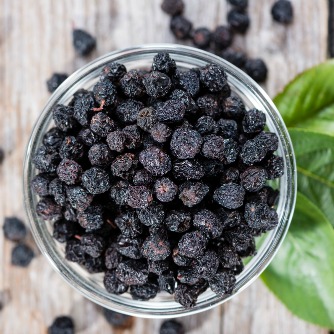
 Aronia or chokeberries as they are also known, are full of beneficial polyphenols, especially when ripe and dried properly. These humble tiny berries got recently more attention for their promising nutritive values. There are red and black chokeberries and are native to eastern North America and were introduced to Europe in 1950´s. Aronia grows on the bush with green leaves that turn deep red in autumn, with white blossoms and round black juicy berries, with a very similar look to cranberries. These berries are classified as a superfood, richer in antioxidants than raspberries, goji and acai, protecting from cancer. It has 3x more antioxidants than blueberries. Aronia berries are good source of vitamins C, A, E, betacarotene and folate, minerals such as potassium, iron and manganese. Hundred grams fresh aronia berries provide 35% DRI of vitamin C.

Chokeberries can be eaten fresh or dried or consumed in the form of juice. They can be used in various recipes, eaten with the morning bowl of porridge, made into jam or added in the smoothies.

Aronia berries are shown to be 5-10x more effective than cranberries in treating urinary tract infections due to the higher dose of quinic acid. They help ward off heart disease. American indians believed it was a good aphrodisiac, when consumed regularly. Study in Poland showed that anthocyanins from the berry are useful in fighting "oxidative stress" in cardiovascular patients. They also improve the circulation of blood, reducing the risk of heart disease. Phenols in aronia disinfect the blood stream in the body, promoting healing of wounds, reducing inflammation, preventing the clogging of blood vessels and removes toxic substances from the body. 

Berries and the juice from it are recommended for anyone with circulatory system problems and blood pressure. Reduction in bad LDL cholesterol was also seen in patients. Aronias are also great for those with diabetes problems, because it does not increase the sugar levels. Dried aronia berry is a great medicine for kidney, stomach and other gastro - related issues, protecting and treating various conditions due to rich antioxidant levels.

For those suffering from colon cancer, adding berries to the diet has positive and very rewarding effect, thanks to their rich dark, black and purple color. Eating aronia slowed the cancer cell growth by 50-80%, treating only bad cells without impacting the good ones. Including aronia in your diet regularly will help you  stay free from colds and flue. It fights bacteria and viruses, boosting your immune system with a protective anti-inflammatory value. 

Aronia berries contain large amounts of carotene, that protect your eyes and prevents cataract formation. They also help in regulating healthy weight and prevents fat being stored around your waistline. These dark colored berries promote creating the good cholesterol in the body. They improve your memory and inhibit the early atherosclerosis. 

The benefits of these really humble berries seem endless hence it is very helpful and beneficial to include them in your diet and consume them on a regular basis.


 100g dried aronia berries contain:
3,4g protein 
59g carbohydrates
22g sugar
24g fiber
270 calories


sources:
dailymail.co.uk
wikipedia
aroniaberrynews.com

Thursday, 13 October 2016

3 new nutritious superfoods to add into your diet

These days, we hear a lot about superfoods and their impact on your life and health. But these so called superfoods are not always the best ones we can introduce to our daily eating habits. I personally think that superfoods are many foods we can find amongst the plant based spectrum, whether it is a nut, seed, fruit, vegetable or a legume. It is necessary to say that superfood can be almost anything that has healing properties which almost every plant has, expect those that can be poisonous for various reasons. 

The Oxford Dictionary definition states a superfood is “a nutrient-rich food considered to be especially beneficial for health and well-being." According to this statement, the superfood can be something simple like apple, more sofisticated quinoa and a dragon fruit with great anti-cancer properties. But these are only few examples of natural foods that can benefit you and your health in a long run. 

The variety is also a key and while introducing these new superfoods into your diet, it is important to note, that it is necessary to eat a variety of beneficial fruits, vegetables, seeds, nuts, legumes and grains of various textures, smell, colors and taste. 

We can get foods that have some amazing beneficts and impacts on one overall wellbeing but the real superfoods are those that have the highest possibleconcentration of nutrients within.

Foods labeled as superfoods, often being sold in the form of powders, are a great addition for healthy eating but should be used merely as an addition together with the proper and a varied plant based foods. They can be used daily and some in smaller quantities because of the concentration of the vitamins and their health power.

I would like to tell you more about the 3 specific superfoods, which are my personal favorites and point out what are their benefits on ones health and how to use them in an every life. The regularity of using them is different to every person, according to their needs, tastes and sometimes the budget as well, as certain superfoods can be more expensive than other. It is though worth it to try and see for yourself.

 
BAOBAB

photo source: baobab-bio.com
The tree of baobab itself can grow to enormous sizes and carbon dating indicates it may live to be 3000 years old. During dry seasons it take the water from the sources it gathered during the monsoon season. So, in dry summer it gives its produce so crucial for farmers and the locals. There is no specific plantation, it belongs to the whole community. Baobab is amazing as medicine for all kinds of diseases.
The fruit is dried directly on the tree and then harvested, removing the seeds and by sifting the final product is then produced, the one rich in nutrients bringing the vitality. Baobab is abundant source of minerals, vitamins and fiber - which is 50% of the fruit, and its antioxidant power is the greatest amongst all foods in the world.

Baobab powder is raw, vegan, kosher, low GI, with no lactose and gluten, no sugar, no additives and preservatives, ideal for sports people and pregnant women as well. It has double the amount of nutrients as acai, also a superfood.

One 10g portion has 5g fiber, 4g carbohydrates, 27 mg vitamin C which is whopping 33% of RDV, 200 mg potassium (10% RDV) and only 25 calories.

Uses:
  • sprinkle on: salads, fruit, pancakes, porridge  
  • add in baking: bread, brownies, cookies
  • mix in: porridge, soups, icecreams
  • prepare drinks: juices, smoothies, water

Useful tip:

 Mix 1 tsp of baobab with a raw 1-2 tsp apple cider vinegar in pure clean water. drink it the first thing in the morning and/or 20min before each meal to aid digestion.


TOP 10 benefits:
  • support of the proper digestion
  • gives energy
  • healthy immune system
  • the highest amount of antioxidants
  • anti-aging afect
  • collagen for healthy and glowing skin
  • ideal before and after the workout
  • natural detox
  • optimal blood pressure
  • regulates blood sugar levels

MORINGA

photo source: tierra-moringa.com
Moringa powder is made from leaves of moringa tree known as a "miracle tree". The leaves are left to dry up on the tree naturally and are collected afterwards. It is one of the most nutrient dense foods on earth. This natural and exceptional multivitamin contains 13 important vitamins and minerals needed by every person daily. There is 23% plant protein in it and a vast number of antioxidants. All of its nutrients are represented in a unique balance and form, which is very well absorbed and used by the human body.

There are no additives and preservatives, it is raw, vegan, sugar free, gluten free, and kosher

Moringa is full of nutrients, as mentioned above, it has 23% of plant protein, 13 important vitamins and minerals, high levels of antioxidants, is high in iron and contains 31% fiber. It has double the amount of beneficial nutrients than spirulina.

One 10g portion contains: 260 mcg vitamin A (33% RDV), 160 mcg vitamin K (213 % RDV), 2 mg vitamin E (17% RDV), 238 mg calcium (30% RDV), 72 mg magnesium (19% RDV), iron 6,55 mg (47% RDV), 3g fiber, 2,3 gr protein and 27 calories.

Uses:
  • sprinkle on: salads, grilled veggies, rissoto, pasta
  • add in baking: bread, healthy cakes and desserts
  • mix in: soups, pasta, dips, spreads and dressings
  • prepare drinks: green smoothies, juices

Useful tip:

Mix 1-2 tsp moringa powder with natural apple juice.


TOP 10 benefits:
  • reduces tiredness and exhaustion
  • healthy and glowing skin
  • anti-aging affect
  • growing and maintenance of muscle mass
  • supporting of immune system
  • healthy nails and hair
  • healthy bones and teeth
  • anti - stress efect
  • detox
  • optimal blood pressure

CACAO

photo source: exportperusac.com
Cacao is not called a superfood for nothing, in greek, word cacao means "the food of the gods", where the intake of only 2 tsp of raw cacao powder during 7 days lowers the risk for cardiovascular diseases by 8%. Cacao is full of essential antioxidants that will make your skin glow and help with it quality. Amongst the other benefits, cacao has the anti-cancerous effect and also positively impacts the immunity and its good functioning. It also helps the body to get rid of toxic substances, which damage the cells, tissues and the whole nervous system.
Cacao contains 300 vital antioxidants, especially flavanoids which are plant antioxidants with anti-inflammatory, anti-viral and anti-oxidants properties. They protect the cells from the internal and external sources and harmful substances. Flavanoids present in cacao beans positively affect the cardiovascular system, blood pressure and the correct blood circulation.
Raw cacao powder is dried in the sun under specific temperature and is considered raw, because of its least processing and there is nothing added in it. Conventional cocoa (note, not cacao) is alkalized for the mass production, and often has added dried milk, sugar and other additives. Raw cacao thus has 10x more beneficial flavanoids and other substances. There is 4000 mg flavanoids in 100g of cacao powder. 
Cacao has 5x antioxidants than goji berries, 100x more than blueberries and green tea. It has similar levels of antioxidants compared to those of moringa and matcha green tea powder.

Raw cacao powder is vegan, kosher, has no sugar, no gluten, no additives and preservatives.
The temperature while preparing and using cacao, has no negative impact on the efficiency of flavanoids.

One 10g portion contains: 1,3g fiber, 1,14g protein, 37 mg phosphorus (5% RDV), 24 mg magnesium (6,4% RDV) and 16 calories.

Uses:
  • sprinkle on: cereals, porridge, fruit, icecream
  • add into baking: cakes, cookies, muffins, raw desserts
  • mix in: hot chocolate, mocha coffee, puddings 
  • prepare drinks: coctails, smoothie, hot chocolate, frozen coffee

TOP 10 benefits:
  • prevents strokes and promotes the cardiovascular health
  • healthy, hydrated skin
  • combats free radicals
  • enhances physical and mental wellbeing
  • lowers blood pressure and improves blood circulation within the body
  • improves digestion through production of digestive enzymes
  • pushes toxins out of the body
  • increases insulin sensitivity
  • superb anti-aging benefits
  • used as a natural cough suppressant

It is important to mention, it is best to buy these from reputable sources in an organic quality to avoid additives and metals and for the most benefits possible.


sources:
aduna.com

Tuesday, 6 September 2016

Tasty and simple vegan apple sauce cake


I have wanted to create and make a recipe using apple or apple sauce for some time. When I happened to come accross this recipe I knew I wanted to try making it. I have taken the idea and recreated it puting my own idea into it. You can make any recipe and get inspired and make it your own by adding or changing some ingredients, making it more interesting or different from original. I personally get inspired a lot by various recipes, photos, blogs, instagram where I get an idea for what I would like to create. I usually change it to put my mark on it or use my own ingredients, often different to make completely new creation or a product. I like to mix and match to see what works the best and how I can better and improve my recipes often trying to change when something does not work out well or is spoilt.
Get inspired with this one and feel free to make it your own where you can change or add different ingredients if you do not happen to have them at home or you are just feeling to make it with another taste or flavor.

I included my lovely niece Sofia into the shoot and the pics for this blog post. She gladly posed for me, without hesitation. Isnt she beautiful? 
 

So, here is the recipe for the cake I made:

Vegan apple sauce cake


Ingredients:
  • 2 flax eggs (2 tbsp ground flax seeds mixed with 4 tbsp water)
  • 1 and 1/2 cup apple sauce
  • 1 cup cane sugar (I used about 1/2 cup, you can use healthier alternatives, like coconut sugar)
  • 1/2 cup grape seed oil (I used olive oil, but recommend to use some oil with a milder taste)
  • 1 tsp vanilla powder
  • 1/2 cup chopped nuts
  • 2 and 1/2 flour blend (I mixed wholewheat, buckwheat, spelt and coconut flours)
  • 2 tsp baking soda
  • 1 tsp baking powder (preferably aluminium free)
  • 1 tbsp cinnamon
  • 1 tsp nutmeg
  • 1/2 tsp all spice or cloves/ginger
  • 1/2 tsp sea/himalayan salt

Make flax eggs, mixing ground flax seeds with water and setting it aside.

Preheat the oven to 350*F/180*C.

Mix apple sauce and sugar together.

Add flax eggs, oil and vanilla.

Then add chopped nuts if you are using them. 

Mix rest of the ingredients in a separate bowl and add it to the wet ingredients. Do not over mix it.

Bake in 25x25 cm baking dish (or 20x20 if you want it to rise a bit higher) for 30-40 minutes, checking if it is ready or not. It may take longer depending on your oven.

This cake is great for breakfast too, or eaten with your afternoon coffee or tea as a dessert. You can also top it off with some home made sauce like I did, where I mixed some frozen strawberries, fresh blueberries, 1-2 tbsp maple syrup and 3 tsp of lemon juice.

As always, enjoy!


recipe addapted from tiaskitchen.com


Friday, 18 March 2016

Home made almond milk


I have been thinking and playing with an idea of making my own home made almond milk for quite a while, and finally I have decided to give it a try.
I have tested some almond milk on the market. Many stores widely sell almond milk in the boxes which has 2-8% almonds in it! Can you imagine it? Are you comfortable with an idea of buying and drinking something that is almost a water on its own? To be honest I have not tried ones that are in the boxes but have tested the one in glass and plastic bottles, which are home made and contain about 20% almonds. I have purchased this at my local health shop and it actually tasted good. The only downfall was the very high cost considering only getting 0,5l bottle and I thought to myself I had to make this very soon.
On top of being just 2-8% almonds, the boxed almond milk contains a lot of harmful ingredients, such as carrageenan and also colorants and other unwanted preservatives and additives.

After seeing this in the shops I was quite disappointed and disgusted and told myself I will not be buying what most of the shops, even health stores are selling.

So, one day I decided to give this a go and finally made my own home made, delicious almond milk. I had bought some almonds previously, so I had them in stock.

Firstly, you need to soak the almonds before hand. There are some powerful blenders where you do not need to do it, but I would suggest to soak them. There are many benefits of soaking, it is better for your digestion and make almonds more bio-available to your system. 
I soaked mine for 2 days, but 1 day should be enough. After this time, the skin from raw almonds was coming off almost by itself. I removed all the skins and was ready to proceed.

Here is the recipe:

Home made almond milk


Ingredients
  • 1 cup raw almonds
  • 2- 3 cups water (or more, depending on how you wish your consistency to be)
  • 1/2 tsp vanilla powder or 1 tsp vanilla extract
  • pinch salt
  • 2 tbsp honey or maple syrup 

Place soaked almonds (without the skin) in the blender. Add vanilla, pinch salt and sweetener of your choice. 

Blend on high until almonds are completely crushed and blended well. 

Pour this through the sieve or even better, use a nut milk bag if you have one. I used cotton kitchen cloth, and it worked well. 

Squeeze the almond remains to get most of your liquid out.

The almonds remains can be used for baked or raw vegan dessert or crackers. Store in the fridge for up to 3 days.

The recipe will yield about 800ml of almond milk. Keep in the fridge and use within 4 days.

Enjoy !


Monday, 8 February 2016

Recipe: Rich fruit smoothie bowl

There is so much healthy food inspiration out there, especially on social media like Instagram. I too, got inspired with creating a first real fruit smoothie bowl. You can see hundreds of variations and colors of all pallets on the photos, topped with various fruits, often the tropical ones and other super healthy toppings, like cacao, nuts and seeds. So one day, I just decided to recreate one of these awesome bowls myself.


Firstly, to explain what exactly the fruit bowl is. As you know, fruit and veg smoothies and juices have been  staples for quite some time and smoothie bowl  is a newer kid on the block.

Smoothies are thicker versions of juices, where fiber is still present as contrary to juices where it is normally removed and only water part of veg and fruit is present. 

Fruit smoothie bowl can be created just from the fruit, which I personally do not prefer but I still, like with smoothies, like to include greens as well.

Difference between smoothies and smoothie bowls are very minimal, as for the composition. What is different is the thicker texture of a smoothie bowl thanks to extras like nut butters, protein powders and ice cubes especially, limiting the water part, which makes it thicker and not suitable for drinking. It is actually even better to use frozen fruits for this purpose. 

As a base I prefer starting with some greens, like baby spinach and/or mint. Then you can add any fruits but the soft ones are the best. You can add bananas, kiwi, peach, pear, mango, papaya, granadilla, any berries .. the popular one these days is colorful dragon fruit. After adding fruit you can put in all your extras, like nut butter, various protein powders or shake, green matcha powder, mesquite or maca, and also various seeds and cacao. The last step is to add very little water or 3-4 big ice cubes instead. Blend this well in your blender on high speed, preferably in high power blender. Now, here comes the best part, decorating your smoothie bowl. You can get creative here. Use various seeds, nuts, cut up fruit in different sizes and shapes for your toppings, even other object that will make your bowl look interesting. This part is important if you want to post your creation on your social media like Instagram. But I say, do it anyway, just for yourself. 

Be inspired with these 2 delicious recipes below:

Mango and kiwi smoothie bowl


Ingredients:
  • 1x mango, cut
  • 1x kiwi, cut
  •  pinch ginger
  • 1/2 cup mint leaves
  • 1 tbsp hemp seeds/hemp seed powder
  • 1 tbsp macadamia nut butter (can be other nut butter as well)
  • 2 tbsp vanilla chai protein shake (can be substituted with other protein powder) 
  • 4 ice cubes (plus little water, if necessary or depending on your desired thickness)

Place all ingredients in your blender and blend all on high until smooth.
Serve in a bowl and top with goji berries, flax seeds, raisins, coconut shavings, chia seeds and granadilla or any other topics of your choice.

This makes 2 medium size bowls.


Banana, pear and blueberries smoothie bowl 


Ingredients:
  • 2 bananas
  • 1 kiwi
  • 1/2 cup blueberries
  • 2 pears
  • 1/2 cup mint
  • 2 tbsp vegan vanilla chai protein powder (you can substitute)
  • 2 tbsp hemp seeds or hemp seed powder
  • 1 tbsp macadamia nut butter
  • 1 tbsp sunflower seeds
  • 5 ice cubes (plus 1/2 cup water if needed) 

Place all ingredients in your blender and blend all on high until smooth.
Pour in the bowl and decorate with granadilla, chia and goji seeds, sliced plum or blueberries.

 This makes 2 medium size bowls.


Enjoy!

Sunday, 3 January 2016

Recipe: Simple and tasty 4 ingredients cacao muffins

I have done this recipe for couple of times and I have always enjoyed it, even though it is very easy and simple to put together. I love everything chocolate so cacao in this recipe is my favorite taste. All flavors from the ingredients come nicely together and they taste great. This time, I have enriched the recipe with couple of additional ingredients. You can completely leave them out as this is very taste just as is, with 4 ingredients total.

So, here it is:

4 ingredients cacao muffins


Ingredients:
  • 4 tbsp cacao powder
  • 3/4 cup peanut butter
  • 2 large bananas 
  • 5 tbsp maple syrup
Extras:
  • 3 tbsp almond meal or almond flour
  • 1 tbsp maca powder
  • 1/2 tsp baking powder
  • 1 tbsp chia seeds

In your food processor or even by hand with the fork, start mixing your bananas. If you are using the food processor do not over process, the mixture should not be runny. 

Add peanut butter, then cacao powder and maple syrup.

Mix to incorporate the ingredients well.

Finally add the extras, if you are using them.

When mixed, the mixture should still be slightly thick (not runny).

Pour mixture into muffin trays. You can fill them up as they will not rise. 

Bake at 170-180ºC for about 20-30 minutes, depending on your oven. It can be even a bit longer.

After being baked, muffins should be nice and goey and not dry.

Makes about 8 medium muffins.


This recipe will have success with anyone, adults and kids as well.

Enjoy!


Wednesday, 9 December 2015

SUN and what you need to know

source: wallpaperscraft.com
In every magazine today, you will find numerous articles about how to behave and protect yourself in the sun, especially in the summer months. Every time I read one, I am thinking all that info is not accurate at all and actually a lot of those things are misleading in order for the industry to make money.

Vitamin D reduces the risk 
of getting a cancer by calcium
 absorption, increasing the cell 
death, reducing metastasis and 
formation of new blood vessels.
 
Against the popular belief, the sun is very important for you, if not essential. Without sun and the sunlight, nothing would exist and we would also die, due to the fact of having insufficient and important levels of vitamin D, especially D3 one. D3 is very important for overall wellbeing and health. Sunlight increases the levels of happiness as well. Vitamin D deficiency has been linked to cancer, diabetes, osteoporosis, IBS, multiple sclerosis and autism. It is also vital for immunity and fertility and protects against melanoma.
Vitamin D is not really a true vitamin as we do not need food to obtain it. When the sun´s UVB rays hit your skin, they are turned into vitamin D3 in your body by triggering a molecule called 7-dehydrocholesterol.
Vitamin D reduces the risk of getting a cancer by calcium absorption, increasing the cell death, reducing metastasis and formation of new blood vessels. There have been studies done on a direct connection between vitamin D deficiency and heart disease. If appropriate levels were met, breast cancer could be reduced by 50% and colon cancer by whopping 80%. Sun is also beneficial for relieving fibromyalgia pain.

Octyl methoxycinnamate 
is present in 90% of 
sunscreen brands.
 
You have surely heard how damaging sun rays are and how much sunscreen you have to apply. This is simply not true. It is a myth that sunscreen prevents cancer, purely promoted by the both cancer and sunscreen industry. Sunlight is very good for your, especially UVB rays - and sunscreens filter out UVB ! This is caused by the ingredient called octyl methoxycinnamate. This ingredient has been shown to kill mouse cells even at the low doses. And more so, when it was shown to be toxic when exposed to the sun. This ingredient is present in 90% of sunscreen brands.
There are also other toxic chemicals present in the sunscreen products, you should avoid, because they are damaging your health:
  • dioxybenzone also know as benzophenone-8 amongst others - linked to cancer, endocrine disruption, developmental and reproductive toxicity and organ system toxicity
  • oxybenzone known also as benzophenone-3, phenylmethanone or methsoxyphenol amongst others - causes cellular level changes, is an endocrine disruptor and allergen. This ingredient is also behind the increased rates for melanoma
  • octisalate know also as ethylhexyl salicylate and benzoic acid amongst others - linked to reproductive and developmental toxicity
  • homosalate - endocrine and hormone disruptor, inhancing the absorption of pesticides in the body, absorbs in the skin
  • octocrylene - can cause allergic skin reactions, irritate skin, eyes and lungs
  • avobenzone also known as butyl methoxydibenzoylmethane, 1,3-propanedione amongst others - degrades in the sun, resulting in the release of free radicals that may increase the risk for cancer
  • retinyl palmitate (a form of vitamin A) - when exposed to UV light, it creates free radicals and therefore may cause cancer, can be toxic for developing fetus in pregnant woman, linked to brain swelling, organ toxicity and cardiovascular disease
  • titanium dioxide - is a mineral and not chemical sunscreen, but some studies show, that it may be carcinogenic to humans. Studies on rats showed when powdered form was inhaled, it caused respiratory tract cancer. No conclusive tests showed toxicity when applied on human skin, so it is everyone´s decision whether they want to use it or not.

Many reports showed that NANO titanium dioxide and zinc oxide (both mineral sunscreens) had the ability to pass through skin and generating free radicals, causing the cell damage. It is therefore important to choose non-NANO titanium dioxide and zinc oxide with the particle sizes larger than 100nm, so read the product labels.
UVB rays are the ones responsible for making you turn pink or red in the sun, also known as sunburn. UVA rays are the nasty ones responsible for getting down into the underlying layers of skin causing wrinkling, aging, and in some cases skin cancer.  Choose a sunscreen that protects from both UVB and UVA (also referred to as “broad spectrum”. Zinc Oxide and Titanium Dioxide both provide broad spectrum protection. My personal opinion is to used products with only non-NANO zinc oxide (or micronized). Zinc oxide products should be swiped on the skin and not rubbed in, as it works on the surface of the skin.

  Choose products with 
non-NANO titanium dioxide
and zinc oxide with the
particle sizes larger than 100nm.
 
It is not said by this that we must be baking in the sun for hours, without any protection. It is essential though that you should get direct sunlight and be exposed to the sun for at least 25 minutes each day without any protection. This is best done when UVB rays are absorbed by the body, between 10,00-15,00. If you are darker skinned, you will probably need more than that. After this period and when tanning for long periods, you should then apply natural sunscreen and reapply after swimming and heavy sweating. Be careful again, as not all natural sunscreens are free of above mentioned toxic chemicals, so read the labels. To protect your skin you can also use one of these: coconut oil, carrot oil, raspberry seed oil and various oil mixtures. These are all available in health stores or online health shops. Aloe vera gel is also very good.

If you are new with this, you should start the sun exposure for about 10 minutes, without any protection. You can increase this slightly each time when you are in the sun, to up to 30-40 minutes depending on your skin type, until slightly red (not burnt! ). This will prevent the burning the next time by the protection you already have. Darker skin will need more sunlight because they synthesize vitamin D more slowly. When exposed to the sun you should bare at least 40% of your skin (like your arms and legs). Do not shower for about 90 minutes after you have been exposed to the sun. This will cause vitamin D being properly absorbed in the body.

  To protect your skin
you can also use one of these:
coconut oil, carrot oil, raspberry 
 seed oil and various oil mixtures.  
  
It is important to note, that in order to prevent early burning, you need to have and adequate levels of vitamins and antioxidants, present in fruits and vegetables as well as B vitamins levels. These will all prevent sunburn. It is enough for you to obtain vitamin D from the sun alone, but in winter when UVB rays are much less or not present at all, you will probably need a good quality vitamin D3 supplement. It is a good idea to supplement even though replacing sun with vitamin D supplements may not be enough for health as sunshine activates nitric oxide, which dilates blood vessels to reduce blood pressure and by this lowers the risk of heart attack and stroke.   

Sunshine and vitamin D is particularly important for children, where high percentage of sick children are vitamin D deficient, as well as older adults with low levels of vitamin D have an increased risk of death. Researches found that children with low levels of vitamin D had increased dental cavities occurrence. In another research, higher vitamin D levels were shown to have decreased knee cartilage loss in patients with knee osteoarthritis.

  Sunshine and vitamin D is 
particularly important for children,
where high percentage of sick 
children are vitamin D deficient.
 
With a vitamin D you cannot overdose, if you get more sun than needed. Your body will automatically produce just the right amount you need.

The only wavelength that makes your body produce vitamin D are UVB rays, when they hit the exposed skin. It is important to note that UVB rays are available only in summer (US, Europe), but it also depends on your location when UVB rays will penetrate the atmosphere when the sun is above an angle of about 50 degrees from the horizon, even in summer. The best is to locate your latitude and longitude and check on Google Earth how many days of the year there are of UVB rays for your location. The sun must be above 50 degrees from the horizon. There is a good app for Apple devices that you could use, called D Minder, which will make the calculations for you. So, remember it is best to expose your skin to these beneficial UVB rays at these specific times and not other times where UVA rays can harm your skin and health.

SPF measures the amount of sunlight it takes to make your skin red while using protection vs the amount of sunlight it takes to make your skin red when you do not have sun protection on. SPF 30 is not twice as much protection as SPF 15, but only small percentage more. SPF 15 will protect you from 93% rays, SPF 30 against 97%. So, do not be fooled by high SPF ratings on the products.

When tanning, you want to choose the best and healthiest option out there, just as for your regular skincare and makeup. The best one to choose is a mineral organic sunscreen. Mineral sunscreens reflect the sun´s rays away from the skin contrary to conventional products, which are firstly absorbed in the skin with all the toxins and chemicals and secondly, the sun´s rays are being absorbed when they hit the skin. You want to choose a product without any chemicals (see the list above). These may cause or have been linked to skin damage, various cancers, hormonal imbalance and birth defects. Natural sunscreens use plant based oils with similar properties as your own sebum. They help your skin breathe instead of clogging it with petroleum-based products. Harsh chemicals can cause allergies as well, therefore it is best for the health of your child especially to choose organic products, which are best for their sensitive skin. 

  Mineral sunscreens reflect the 
sun´s rays away from the skin 
contrary to conventional products. 
 
Organic sunscreens also work immediately, as they do not need to absorb into the skin first. The SPF that is in organic products are obtained from minerals like zinc oxide and also titanium dioxide (as I have explained above). There are different oils used in the products for the best SPF protection. Be sure again, to check the ingredient list for unwanted chemicals by reading the product labels. As shown, there are a lot of organic products, sunscreen not excluding, containing phenoxyethanol and alcohol as well.

When looking for good, safe and effective organic sunscreen product, you want to use something with the best ingredients possible. Herbs are one of these ingredients you can look out in your sunscreen products:
  • green tea - contains powerful and beneficial antioxidant that protects the cells on the inside but has been shown to prevent sunburn when applied on the skin as well. Drinking 2 or more cups daily, showed 65% lower risk in skin cancer
  • various oils - coconut, sesame, olive, broccoli seed oil, borage, evening primrose, avocado and tea tree oil. In a study sesame oil has been show to block 30% of UV rays
  • vitamin E - is an antioxidant and the natural forms such as alpha-tocopherol and tocotrienol protected the skin, so it showed less damage after sun exposure, with less roughness, facial lines and wrinkels
  • krameira triandra root extract - this extract was found in studies to be even more protective than green tea
  • coenzyme Q10 - powerful antioxidant that counteracts damaging free radical activity caused by the sun and could provide enhanced protection from inflammation and premature aging, when used in the skin products
  • golden serpent fern - is a herb, that works as an antioxidant, protecting DNA and skin from UV damage, beneficial especially for sensitive skin
  • helichrysum flowers - protect the skin from damaging rays, with anti-inflammatory and regenerative qualities
  • rosemary - is also rich in antioxidants and protects from free radical damage and helps tame inflammation
  • lavender - is widely used in natural sunscreens, it has a lovely scent in addition to important shield from free radicals as well as protections against cancerous changes

Lastly but not the least, I would like to share with you some links for the online stores where you can order natural and organic products and sunscreens too:

South Africa

http://www.faithful-to-nature.co.za/

http://www.wellnesswarehouse.com/

https://www.ecostoreonline.co.za/ 


http://www.pureskincare.co.za/

http://mioja.co.za/


Europe

http://www.naturisimo.com/

https://www.lovelula.com/

https://www.ecco-verde.com/


Slovakia

http://www.bioshop.sk/

http://www.bioterra.sk/

http://www.ekomarket.sk/


US and Canada

http://www.beautycounter.com/

https://thrivemarket.com/

http://www.amazon.com/s/ref=nb_sb_noss?url=search-alias%3Dbeauty&field-keywords=organic+

http://www.ecodivabeauty.com/CA/  


Australia 

https://www.nourishedlife.com.au/ 

http://www.iamnaturalstore.com.au/


sources: 
truthaboutcancer.com
mercola.com
safemama.com
faithful-to-nature.co.za
safecosmetics.org
ewg.org
annemariegianni.com


Friday, 27 November 2015

Recipe: Chia seed pudding with almond milk

Today, I would like to share with you what I normally eat for breakfast. In today´s world there are a lot of possibilities what one can have and enjoy as their first meal in a day.

Eating breakfast, as we know, is very important. But is it really? Study suggest, that when we skip or rather postpone our first meal to later morning or at least 2-4hours, our bodies will burn more fat this way.

This is called intermittent fasting, and it means, that there are at least 14hrs between our last meal in a day and breakfast in the morning. This would practically mean, that we have dinner at 6pm latest and breakfast at 8am in the morning, which in not so bad. This period can be prolonged though, and you can have your first meal even between 10-12am, or later. This also does not mean we will eat more than what we normally do, but would enjoy the same or even less food as usual. Intermittent fasting comes in different methods, where you can fast to up to 36hrs with very few to no calories, or eat very few calories in one day and normal the next day.

Here you can see more detailed info about various methods:

If you look at this closely, each of us fast every single day, without even realizing it. We fast when we sleep, and intermittent fasting is only about prolonging this period of sleep, and means we will just skip a meal or two. This can be done without much effort. The good method and quite easy one to follow and stick to is the one explained above, where you will have about 14-16hrs fast or a break between your last and first meal of the day. There is a reason why we call breakfast breakfast after all, which literally means break - fast. So we actually break our fast with the first morning meal. 

Intermittent fasting has a lot of benefits, it helps to loose weight and belly fat, improves body composition and helps you to feel better overall. Intermittent fasting changes the function of cells, so when we fast the waste material from the cells is being removed, this is called autophagy. Insulin levels drop significantly whereas the human growth hormone may increase, both factors make it easier to burn fat. It is also beneficial for lowering the risk of diabetes. Fasting can also reduce oxidative stress and inflammation in the body and is effective for your heart and brain, preventing cancer and good for stabilizing blood pressure and cholesterol levels. And finally it has been proven to prolong one´s life making it a great tool for anti-aging rewards.

So, what do I typically eat for breakfast ? This may vary, but i do alternate between having a green smoothie, a bowl of healthy porridge, freshly cut up fruit, cooked oats and a chia seed pudding.
I would always try to incorporate protein, healthy fats and carbs into my breakfast. This would mean I will add nuts, seeds or nut butters for healthy fats and protein. Wallnuts, almonds and macadamia nuts are great options, as well as pumpkin, sesame and sunflower seeds. Hemp seeds are especially good for their high protein content as well as chia for their omega 3´s benefits. As for the fruit, I try to eat various kinds of different colors for the different benefits, mineral and vitamins content.

Green smoothies are a great way to start your day. Mine are usually full of greens like kale, spinach, coriander, fresh mint and other greens, as well as hemp seed powder for protein and sometimes a piece of avocado, which is great as a healthy fat addition to my smoothies. I will usually add a piece of fruit per one portion of smoothie. This would be one apple or pear, 1 kiwi, 1 banana or 1/4 or pineapple. I will add some extras, like baobab powder - which is very good source of calcium and fiber as well as a good source of prebiotic. Sometimes I will add chia seeds too or mesquite powder with its sweet caramel flavor and high protein content.

I eat my oats cooked, and finish it with a few raisins, 1 tsp of cinnamon, couple of dates or grated apple. There is a lot of ways how you can eat your oats, you can add coconut or almond milk in the pot while cooking as well as few raisins and dates. You can soaked your oats in plant milk overnight as well, either plain or with some vanilla extract or powder, chia seeds, grated apple or mashed banana and strawberries.

My porridge consist of gluten free grains, sometimes it is a mixture or I will use millet, amaranth, buckwheat or spelt flakes. I will mix this with some warm rice or almond milk and add some nuts and seeds. My favorite are chia seeds and goji berries. I will add some shredded coconut if I feel like it. Other great options for porridge are cooked whole buckwheat or quinoa.

Fresh fruit is really a good option for breakfast and is best enjoyed and absorbed by the body when eaten on an empty stomach first thing in the morning or before lunch. It should not be mixed with other foods, especially if couple of portions of fruit is being used. This is due to the fact that it takes only 2-3hrs for fruit to digest in the stomach and if its eaten with some other food it will ferment there until the other food has been digested. My favorite fruits are bananas, pineapple, papaya, all sorts of berries, guavas, grapes and kiwi.
If you do not like to eat a lot of cut up fruit, the other option is to blend it into a nice fruit smoothie bowl and enjoy it this way.

Last but not least, is my favorite chia seed pudding which I really like. Usually I will soak chia seeds overnight with some rice or almond milk, bit of vanilla powder and shredded coconut. So, when I wake up, I will take this out of the fridge and mix well, decorate this with some coconut chips, a few blueberries or half banana (see the note about fruit above) and a dash of sweetener, preferably the healthier option.


Let me share a simple recipe with you here:

Chia seed pudding with almond milk


Ingredients:

  • 1 tbsp chia seeds (2 tbsp if you like it thicker)
  • 1 tsp baobab or/and maca powder (you can add any superfood powders)
  • 1 tbsp dried goji berries
  • 2 tbsp shredded coconut
  • 200 ml almond milk

This serves one portion.

Place all ingredients in a glass and mix well. 

Let sit in the fridge overnight.

Take out in the morning, mix again, add more milk, if its too thick.

Sprinkle with some crushed nuts, cacao powder, coconut chips and couple of blueberries or half banana. 

Sweeten to taste if you need a little sweetness to it.

Enjoy !


source: 
authoritynutrition.com


Monday, 23 November 2015

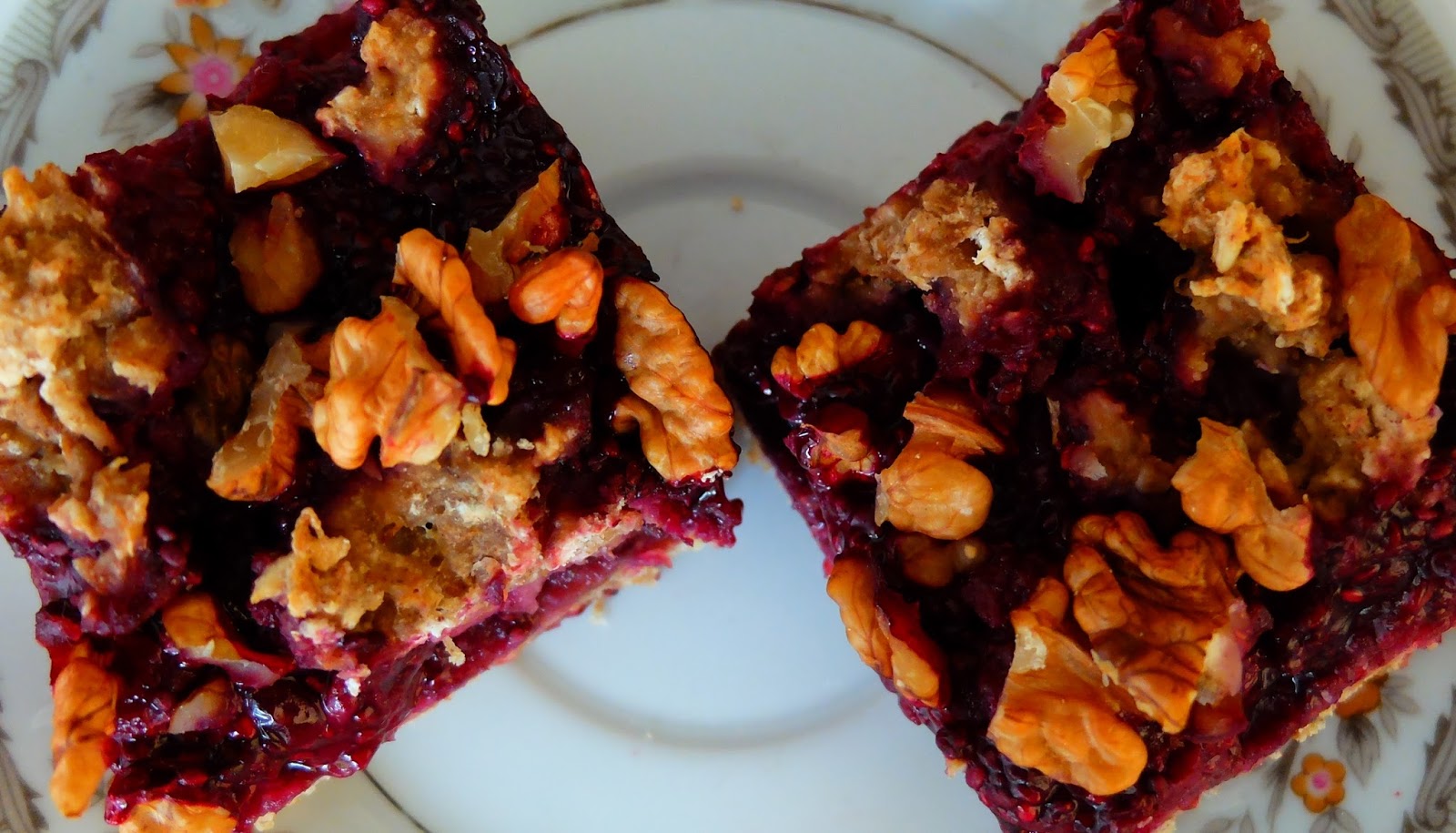
Recipe: Oat squares with chia jam

Today, I am sharing with you this yummy oat chia jam squares recipe. They are easy to prepare, tasty and not overly sweet. The base of these squares are made of oats and bananas. We will do without flour or oil in this recipe. I have used a bit of rice and spelt flour instead of ground oats in the original recipe. The top layer is made from chia seeds and berries. Original recipe calls for frozen raspberries, but I used frozen berry mix.
Chia seeds are one of the superfoods and come from the desert plan called Salvia hispanica, grown in Mexico, Bolivia and Argentina. They have mild, nutty flavor, making them easy to add to different foods and beverages. They are rich in omega 3´s fatty acids and also contain a lot of protein, fiber and minerals. The seeds are dissolvable, absorbing up to 12 times their weight in liquid when soaked. While soaking, the seeds develop a gluey gel-like coating that gives chia-based beverages and liquid foods a distinctive texture. Chia seeds should always be put into a liquid based mixture (water, plant milks, smoothies, green drinks, raw or baked bars and cookies, breakfast oatmeal) and never eaten dry on its own. Either whole or ground chia can be used in the food preparation. It is a good replacement for an egg and oil in cakes in vegan recipes in addition of providing great health benefits from their nutrient content.


Oat squares with chia jam
 
Ingredients for chia jam:
  • 300 g raspeberries (frozen), I used 400 g frozen berry mix and about 100 g fresh blueberries
  • 3 tbsp chia seeds
  • sweetener according to taste (I used 1 tbsp maple syrup)
 
 Ingredients for oat square base:
  • 2 soft bananas
  • 100 g whole oats
  • 100 g ground oats (here I used 1/2 spelt and 1/2 rice flour with 1 tbsp corn flour)
  • 1 tsp cinnamon
  • 1 tsp baking powder
  • handful chopped wallnuts
  • sweetener of your choice (I used 2 tbsp maple syrup)


First, prepare the chia jam. Place your berries in the pot on the stove, with a little water, stirring regularly. Cook this until very soft. Set aside, stirring in chia seeds and sweetener of your choice. Let it cool for an hour.

Prepare the oat base by mixing bananas (feel free to do it with your hand mixer, or by hand as I did), adding oats, flour (if using), cinnamon, baking powder and sweetener to taste.

Pour 3/4 of the mixture into the prepared baking tray. You can press it down a little bit. I used a bakeware measured 30 x 21 cm and wiped it out with a light coating of coconut oil. You can also line your tray with a piece of parchment (baking) paper. Pour chia jam on the oat base and sprinkle the remaining mixture and crushed wallnuts on top.

Bake at 180 °C for 30-40 minutes.

Take out, let it cool and enjoy. It is very tasty on its own, but you can revamp it with some whipped coconut cream.

1pc: 124 cal, 3g protein, 21g carbohydrates, from which 3g is fiber, 3g fat


recipe adapted from fitcult.refresher.sk